Thursday, January 5, 2017

Wednesday, January 4, 2017

Again I had difficulty getting to sleep last night.  I took a 2mg sleeping pill and went to bed at 11:30. I got up at 12:30 and took another 1mg.

I woke up about 7am or 8am and told Teresa maybe we should get up since she wanted to go to the grocery store early.  She told me to go back to sleep.  I woke up again at 9:50 and got up. 

We left the apt at 11am (not exactly early) and at the Euro in Mayorista we picked up a cart full of groceries.  I picked up 2 packages of microwave popcorn and I found a container of Italian seasoning that my brother asked me to look for.

I had a cup of coffee while Teresa finished shopping.  She met me at the cafeteria and asked me if I’d like ribs for lunch.  I said “yes” but so she doesn’t need to cook why don’t I just buy myself a hotdog here at Dogger?  She agreed so I had lunch there and she had coffee and a fish cake.

Back at the apt it cost 8,000 pesos for the “cash” car ride.
I received an email from MBE that I had a document waiting to be picked up.
Teresa told me that her mother is coming over at 4pm and they’re going to the gym to see when they will be starting exercise classes again.

So, I left the apt and quickly caught a bus to Poblado.  I stopped at MBE and picked up my document.  It turned out to be a Christmas card from my chess playing friend in Hawaii.  According to the postmark it took 3 weeks to get here.

I took a bus up to Starbucks and ducked inside and checked out their snacks.  No blueberry muffins today.  L  But on my way out I saw a very pretty 40-something woman waiting in line so I guess the detour was worth it.  J

I quickly caught another bus back to the apt.

Teresa came back and told me they won’t be starting exercise classes again until Monday, January 16th.

I wrote up a quick review for Flip Flop Sandwich Shop and submitted it to Trip advisor.


T-shirt of the day: Happy fucking XMAS.

Wednesday, January 4, 2017

What Comes After Denial? Thoughts on Donald Trump's Movement - Medium.

What Comes After Denial? Thoughts on Donald Trump’s Movement

“In an ever-changing, incomprehensible world the masses had reached the point where they would, at the same time, believe everything and nothing, think that everything was possible and that nothing was true.”
—Hannah Arendt, The Origins of Totalitarianism
I was in the lobby of a theatre this week after the election, having an honest talk about Donald Trump. A lady came over to me and my friends and whispered, “keep your voice down or you’ll get arrested.” I told her she was being ridiculous and she responded that we all had to be careful. He would arrest his critics. I understand some people are upset. I’m upset. But paranoia leads to isolation. The worst thing we can do is silence ourselves, to act as if the danger is worse than it is. There are real problems. Let’s not pretend to have problems that don’t exist.
So what is the situation that shows itself in the election of Donald Trump?
Donald Trump is boorish and a bully. He is mean. Whether he actually is a bigot or just plays one on the national stage, his enabling of bigotry is real. The NY Times published a long list of the 282 people and ideas that Trump insulted on Twitter. Anyone who reads that list and doesn’t see that Trump is a stunted person has lost their faculty of judgment. It may be that 58% of those who voted for Trump don’t like him. Many say that he is different in private. But does it matter? What matters is less Trump himself than what his election says about us.
Trump’s most revealing line was early in the primaries when he claimed he could shoot someone on Fifth Avenue and still be elected President. He has been proven correct.
I am shaken by the lack of judgment of my fellow Americans. For Trump, the basic principle of nihilism, that everything is permitted, is a mantra. It is a sign of his ruthlessness, his willingness to do anything to win. And that is part of his attraction: that he will be a strong leader who will do anything to win. In business, Trump uses lawyers to refuse to pay his contractors. He uses lawyers to avoid income taxes (sometimes legally, but likely not always). He uses lawyers to bully those who would question him and journalists who report on him. Just two weeks ago he repeatedly threatened to not accept the election results. The very ‘win at all cost’ mentality that should disqualify him convinces us that Trump will succeed.
I say this as someone who very much understands the attraction of someone like Trump, an outsider who would come into Washington owing no one anything and “drain the swamp” as Trumps’ supporters like to say. I at times hoped Trump would prove himself worthy, for I am furious at political corruption and the culture of lobbying. I too want to attack the culture of privilege in government and in business and in cultural institutions. If Trump carries through his plan to reduce lobbyists, reduce regulations, and limit congressional terms, much good would come. But what in God’s name makes people think that Trump can do this? He has no experience in administration. No record of public service. And shows no evidence of being able to manage a sprawling Federal bureaucracy, let alone being able to oversee foreign policy. He lies with abandon and insults everyone. How have we put our hope in such a man?
When we lose our willingness to judge, when we come to accept vileness into our political world, we prove that we have made peace with our nihilistic faith that “everything is permitted” so long as it is useful. We show ourselves for who we are, a people whose indifference to ethical vacuity exemplifies our own banality with regards to evil. This election is a necessary mirror, and we should all be looking at ourselves.
What drives the pundits crazy is that the data doesn’t support their simplistic narratives. Trump won more Latino and more African American voters than Mitt Romney despite the fact that Trump legitimized angry denunciations of illegal immigration from Mexico and fanned racism and antisemitism; Clinton didn’t carry women voters by as much as Barack Obama did and Trump won the majority of working-class-white women, even though Trump bragged about sexual assault and was accused of assault by eleven women; and white lower-class voters began to abandon their traditional democratic leanings even though Trump is a plutocrat with absolutely no record of public service, no history of philanthropy, and no record of being concerned for the average American. The pundits are befuddled, since they thought and think the election was about race, gender, and class. But the data around racial and gender support are all equivocal.
Too often left out in this litany of resentments is the fact that Trump’s popularity was fueled by a deep, abiding, and angry resentment against the pundit class itself, the elites — that is those of us in positions of authority throughout this country. More than racism and sexism, and even more than class, this election was a rebellion against elite power.
The elites have given themselves the keys to power. Seventy-two percent of all voters in the New York Times’ exit polls (voters for both Hillary Clinton and for Trump) say they “believe the economy is rigged for the advantage of the rich and powerful.” Sixty-eight percent of all voters believe that “politicians from Republican and Democratic parties don’t care about people like you and me.” If we want to know where Trump comes from, we should be looking at those of us in the political, business, media, and cultural elite.
What stands out in the election polling and is obvious from watching the frenzied and enthusiastic support for both Trump and Bernie Sanders is that the electorate is furious at the power of the elite. The people feel spurned. The forgotten people are rebelling. We are witnessing a rejection of elite power. Eighty-three percent of Trump voters say “bringing real change” is the most important quality in a President. We are seeing a rejection of ourselves. And we need to take that seriously.
Throughout history, the people don’t despise or resent power in itself. What they resent, as Alexis de Tocqueville noted in his description of the French Aristocrats about to lose their power, is unjust and illegitimate power.
“[T]he French people hated the aristocrats about to lose their power more than it had ever hated them before, precisely because their rapid loss of real power was not accompanied by any considerable decline in their fortunes.”
The people loved the aristocrats until the power of the rich seemed unnecessary and “the people felt them to be parasites, without any real function in the rule of the country.” The lesson Hannah Arendt took from Tocqueville is that “neither oppression nor exploitation as such is ever the main cause for resentment; wealth without visible function is much more intolerable because nobody can understand why it should be tolerated.” In other words, when people rebel, it is because they come to see the power elite as useless and superfluous. They are usually right.
Trump has tapped into the growing realization that the wealth and power of the connected business, political, cultural, and media elites has no visible function. When the economy is growing, when schools are functioning, when health care is accessible, when jobs are plentiful, and when hard work leads to success, the people generally tolerate and respect the powerful. For the last 50 years, however, the elite has made a promise to the people. “Let us — the college-educated, the social-scientists, and the experts — let us run the country. Give us your taxes. You live your lives and don’t involve yourselves in politics. Let us take care of you.” And after fifty years, the people are looking at the system that the elites have created and crying foul.
Trump’s election is an opportunity, if we grasp it. It is an opportunity to break down our prejudices and reach out to the people who are so angry that they were willing to risk voting for Trump. We should hear their stories with an empathy and solidarity that is currently lacking. Yes they must listen to us as well. Both sides need to reach out and engage in deep and ethical listening of the kind imagined in this public living room conversation between Trump and Clinton supporters. And that will require revising our worldviews, admitting our own failures and limitations, and renewing our respect for people very different from ourselves.

In writing about the evils of genocide and totalitarianism, Hannah Arendt insisted on the effort to understand. “To understand totalitarianism is not to condone anything, but to reconcile ourselves to a world in which such things are possible at all.” Understanding means making our knowledge of totalitarianism meaningful. Understanding is a “strange enterprise,” and an “unending activity” by which we “come to terms with and reconcile ourselves to reality, that is, try to be at home in the world.” But why should we make totalitarianism meaningful? Why reconcile with evil?
Arendt argues that by making totalitarianism “meaningful,” understanding “prepare[s] a new resourcefulness of the human mind and heart.” In understanding, we take the other person’s point of view. We don’t abdicate our power to judge, but we do seek to make sense of that view, to see the world from its perspective. When I seek to understand I broaden my own view of the world and come to know my own view of the world as partial. This is why “Understanding is the specifically political way of thinking;” in understanding I take “the other fellow’s point of view!” and thus enter into political dialogue.
The election of Donald Trump as President needs to be understood; we need to enter into a political dialogue with the people who are angry. We need to listen to them. Listening does not mean agreeing. We may find them wrong. But we need to listen and we need to reconcile ourselves to a world in which people who don’t like Trump, who find what he says offensive and rude, would nevertheless take the risk in making him President because they are desperate to break up and destroy the corrupt system of power. My remarks here are an effort at such an understanding.

The United States finds itself amidst a worldwide reaction against globalization, cosmopolitanism, and elite governance. Terrorism threatens civilized security; climate change threatens our earth and our health; globalization threatens to leave us homeless and rootless; refugees threaten to render ever-greater populations superfluous; technology threatens to make humans superfluous; bureaucracy threatens a tyrannical rule of nobody; and rampant inequality combined with corruption threaten to undo the legitimacy of government, business, religious, academic, and other institutions that are the bedrock of our lives. The problems are so enormous that hoping for a solution feels juvenile.
To whom shall we turn to for guidance in such perilous times? The same politicians, funded by the one percent, who have lined their pockets and led us to the brink? The business community with deep interests in the status quo? The media, corporate owned, who feed us pro-and-contra as if it were a tennis match? The cultural elite that is obsessed with itself and sees the majority of Americans as rubes and bumpkins?
The people have turned to Donald Trump as their tribune. Why?
Part of the problem is that they saw no good alternative. Hillary is to my mind a supremely competent person. Hillary’s loss was painful for me and many others. But we also must listen to what the voters say. They want change. When Trump says that Hillary has been in and around power for 20 years and asks what she will do now that she hasn’t done then, he is right. The voters despair of change. Hillary and Bill Clinton are now worth somewhere around $50 Million according to Forbes Magazine. Whatever Trump may be worth (and we don’t know), he earned his money through dirty business, but at least he admits it. The Clintons come across as hypocritical, claiming to be warriors in the public interest. But in 14 years between 2001 and 2015, they earned $230 million through speaking engagements, book deals, and consulting gigs. While the media largely covered the Clinton’s email server scandal, the social media world lit up over the pay-to-play scandal around the Clinton Foundation that was revealed in the Wikileaks hacks. I have no love for Wikileaks and I understand the hesitancy to publish hacked private emails. But there is no doubt that Hillary’s willingness to enrich herself and her family in and around her public work and her apparent conflict of interest during her time at the State Department that contributed to her defeat.
Perhaps even more important was Hillary’s labeling of Trump supporters deplorable. Worse, she doubled down and said maybe only half of his supporters were deplorable. This is a form of bigotry. Granted, Clinton did not make bigotry a centerpiece of her campaign, as did Trump. But Trump’s bigotry was always presented as entertainment, as a flourish. He walked a fine line between bigotry and hyperbole; at times he crossed that line. But Trump could always plausibly say he didn’t mean it. With Hillary’s comments about the deplorables, there was no doubt. She, and so many of us, her supporters, feel immeasurably superior to Trump supporters. Too many of us see them as uneducated, rude, racist, sexist, xenophobic, and less important. Our privileges are justified because we are better. We elites need to face our very real bigotry; if we don’t, this election will be just the beginning.
But still, why Trump? Why did the people choose a plutocratic billionaire playboy and harasser with no public experience and no apparent administrative competence to be their savior? On one level, Trump’s celebrity and narcissism allowed him to stay in the race even when he said and did things that should have ended his candidacy. There have been other “outsider” candidates who have captured the people’s imagination, and then crashed and burned. I think of Herman Cain and his 9–9–9 tax proposal and his insistence on a three-page limit on all congressional legislation. Cain was the most-covered candidate in the 2012 Republican field according to Pew Research, until allegations of sexual assault ended his campaign. Somehow, Trump just powered through much more specific and numerous allegations. And his supporters did not care.
But there is a more important reason that Trump — hardly a man of the people — was able to become a leader of what he aptly describes as a mass movement. The key to understanding Trump’s success is to see how and why he has been able to commandeer a movement.
In her chapter on “The Totalitarian Movement” in Origins of Totalitarianism, Arendt notes that the leaders of movements are marked by their “extreme contempt for facts as such.” The reason for this contempt for facts is that the world is complicated and uncertain. For the masses of people who are suffering dislocation, instability, and meaninglessness in their lives,
“movements conjure up a lying world of consistency which is more adequate to the needs of the human mind than reality itself; in which, through sheer imagination, uprooted masses can feel at home and are spared the never-ending shocks which real life and real experiences deal to human beings and their expectations.”
The great danger in all movements is that they can have no firm goal; as movements, they continually need to stir up their supporters who drive them forward. If any goal is met, a new one must be contrived. So movements are motivated less by a firm end than by a promise to fulfill a deep spiritual need. That is why movements mobilize masses who are longing for a “completely consistent, comprehensible, and predictable world.” There is a “desire to escape from reality because in [the mass of the people’s] essential homelessness they can no longer bear its accidental, incomprehensible aspects…”
That Trump has so insightfully characterized and mobilized his supporters as a movement is evidence of his deep understanding of what he is doing. He possesses an incredible instinct for those words, phrases, and insinuations that give order and sense to the movement. He pokes at racism, sexism, anti-Semitism, and anti-Islamism and in doing so allows his supporters to construct coherent narratives about the America Trump will restore to its greatness. He appears as the truth-teller, the one who reveals those hidden truths that polite society and the elites refuse to utter. And because the elites are so careful to not offend anyone and have placed so many topics and truths off the table of common conversation, Trump looks like a prophet and a truthteller.
Like the earlier mob leaders, the spokesmen for totalitarian movements possessed an unerring instinct for anything that ordinary party propaganda or public opinion did not care to touch. Everything hidden, everything passed over in silence, became of major significance, regardless of its own intrinsic importance. The mob really believed that truth was whatever respectable society had hypocritically passed over, or covered with corruption … The modern masses do not believe in anything visible, in the reality of their own experience … What convinces masses are not facts, and not even invented facts, but only the consistency of the system of which they are presumably part.
Stanley argues that the effort to create a consistent reality must be in the service of some “simple reality as a means to express his power.” The only question Stanley sees is, “What is the simple reality that Trump is trying to convey?” For Stanley, the answer is obvious. “The simple picture Trump is trying to convey is that there is wild disorder, because of American citizens of African-American descent, and immigrants. He is doing it as a display of strength, showing he is able to define reality and lead others to accept his authoritarian value system.”
But this assumes that Trump’s movement is a totalitarian movement, one that seeks to fully actualize its fictional world through terror, an assault on the rule of law, the empowerment of a bureaucratic secret police, and total domination. Arendt describes the way a totalitarian government is grounded in a movement. Her description of the danger in movements is relevant. But there is simply no evidence for this idea and no need to believe that Trump is a totalitarian figure.
What is more, there is no coherent ideology underlying Trump’s movement. The very premise of totalitarianism is that there is a single, unifying, total idea — an ideology — that is to be actualized and affirmed. Trump has no such governing idea. His pragmatic openness characterizes his particular movement and is what makes his movement both so popular and so dangerous. It is a 21st-century movement in the sense that Trump, as its leader, does not insist on any kind of fidelity to a single idea. He empowers all sorts of fantasies (anti-immigrant, anti-Semitic, anti-Islamic, racist, misogynistic, nationalist, and more). But no one in the movement must pledge fidelity to one idea. What he does as the leader of the movement is make it acceptable to establish whatever conspiratorial fantasy one wants. And the way Trump does this is through a cynical and nihilistic war on reality.
The power behind Trump’s movement is cynicism. What Arendt saw in movements in general and Trump has now made real is that cynicism is deeply liberating. When reality is oppressive and messy and disorderly, cynicism gives people permission to remake their realities in ways that are more comfortable:
“In an ever-changing, incomprehensible world the masses had reached the point where they would, at the same time, believe everything and nothing, think that everything was possible and that nothing was true.”
The totalitarian leaders Arendt described sought to make their followers believe their ideologies and saw that they
“could make people believe the most fantastic statements one day, and trust that if the next day they were given irrefutable proof of their falsehood, they would take refuge in cynicism; instead of deserting the leaders who had lied to them, they would protest that they had known all along that the statement was a lie and would admire the leaders for their superior tactical cleverness.”
Trump has mobilized that same cynicism, but without the claim of guiding or leading an ideologically driven movement. He has empowered a uniquely American and individualist version of a movement, one that grants individuals and groups license to create and defend their own meaningful realities.

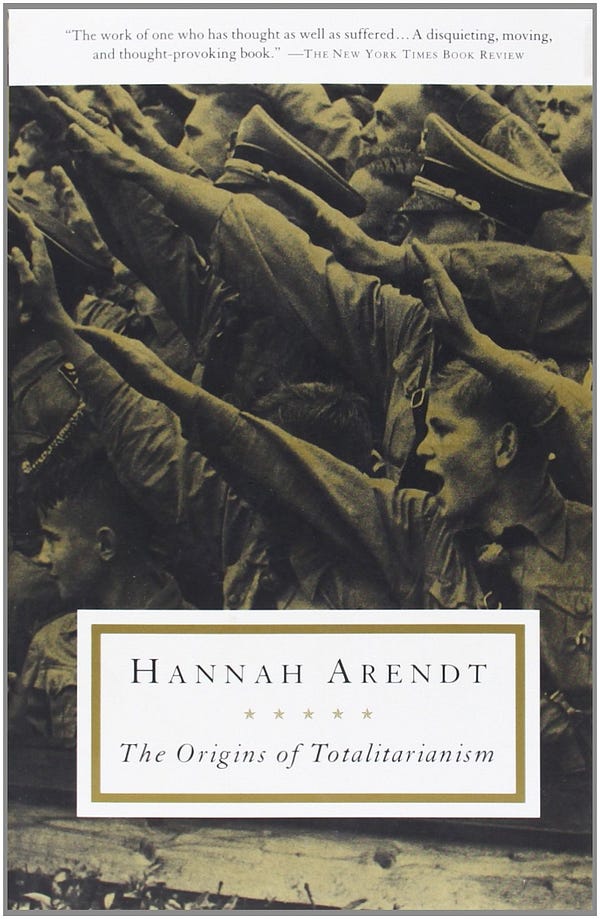
I stayed up on election night to see the President Elect give his acceptance speech. I told others the speech was important. We had to see how he would react to having won. And in general, I was heartened by what I heard and saw. He was gracious and Presidential. The one policy he spoke of was one that appeals more to liberals than to conservatives, the investment of $1 trillion into infrastructure developments in inner cities and around the country.
When I offer praise for Trump’s speech, my colleagues scoff. They ignore or laugh at Trump’s repeated insistence that he will invest in inner cities and rebuild our outdated infrastructure. And they deride Trump’s slogan “Make America Great Again.” True, there is an emptiness to such a cliché and also a dangerous nostalgia for a time that does not exist.
Yes, but we can also hear Trump’s slogan charitably. It is a call to a time when in America we built the world’s tallest buildings, opened the Western frontier, took risks to construct beautiful bridges and open grand public concourses. Yes, in settling the West we committed a genocide. Yes, FDR’s National Highway System may have been justified as a wartime necessity, but it was also emblematic of an American drive for the bold and the big. Central Park was imagined as a way to keep the huddled masses happy, but it has proven a grand and democratizing public space. Nostalgia is always partial; but that doesn’t mean nostalgia is not meaningful. It calls us to values we cherish. It beckons us to act.
I suggest that, for now, we read Trump’s positive project charitably. This in no way means that we abandon our vigilance regarding the very real dangers Trump represents. Those dangers include our collective loss of judgment, public cynicism, and the real threat of increasing violence against many communities and individuals. We must have the courage to stand up to violations and actions that threaten the rule of law, the dignity of persons, and basic Constitutional rights. Thus we must heed Arendt’s warning, not to excuse the stirrings of tyranny and totalitarianism when we see it:
“There is a great temptation to explain away the intrinsically incredible by means of liberal rationalizations. In each one of us, there lurks such a liberal, wheedling us with the voice of common sense. The road to totalitarian domination leads through many intermediate stages for which we can find numerous analogies and precedents…”
Arendt meant those words as warnings not to excuse other countries that would begin down the path to totalitarian domination. But it applies well to us hear in the United States as well. I have written about the real elements of fascism that are included in Trump’s movement. We are not yet in any danger of becoming a totalitarian country. Let’s be thankful for that. And let’s keep it that way.

Roger Berkowitz, Academic Director, Hannah Arendt Center for Politics and the Humanities, Bard College

Tuesday, January 3, 2017

Today was an unusually sunny day; unusual because we have had so many cloudy days over the last few months.

For some reason I had difficulty getting to sleep last night – maybe 2 hours?  But that was offset by the fact I only got up once during the night.  I did have to take an Excedrin Migraine to clear my head.

After my quick shower I made a quick trip to the corner store for milk.

I found a flyer downstairs from Office Depot advertising a “caja para archivo” (hanging file folder box) for only 4,250 pesos (about $1.50).  I think I’ll pick up one of these.

Since I was going to be on my own today I checked some restaurants on Trip Advisor and was surprised to see The Flip Flop Sandwich Shop listed.  I checked a few more restaurants just in case it wasn’t open.

Laura left for work at 11am and Teresa, MT and I left 15 minutes later.

We walked downtown where we quickly caught a bus to Medellin.  I got off at Parque Poblado at noon and the ladies continued on to San Diego mall.  I understood they wanted to look at dry flowers (?) and gym shoes for Teresa.  Also, MT hasn’t been there before.
I walked up Calle 10 and stopped across the street from one of my backup restaurants called Sicilia in Bocca but it looked like a real hole in the wall place with just a couple tables.

I continued on to Flip Flop Sandwich Shop at Carrera 36 #8A-88.  I don’t know which was more surprising – that it was open or that Chris, the old owner, was there.  He was talking business with a young man named Juan. 

He hasn’t owned the restaurant for a few years and his new business plan is to open a court in Envigado called Cancha de Tejo – a Colombian game which I liken to something like the bean bag toss game although instead of throwing it in a hole you try to hit something that explodes.  Supposedly it’s the national sport of Colombia.  (And here I thought it was fútbol or cycling.)  You can find more information at his website www.TejoInMedellin.com.  (If you check on Youtube you should be able to find a video.)  Beer and explosives – what could go wrong?

Chris told some stories about the challenges of running his little restaurant.  Backpackers would stop by and look at his menu where for 5,000 pesos (today about $1.65) they could get 2 eggs with toast.  They would ask if they skipped the toast could they get the 2 eggs for 4,000 pesos (today about $1.35).  No!  They would often go down the street to Bunuelos and have a bunuelos for 2,000 pesos instead.

I had a Sloppy Joe (just like mom used to make) with potato chips and a Coke for 12,000 pesos (about $4) while I listened to them talk about how to get their business off the ground.

As I left I talked to Paula, the owner, about my brother coming next month and asked if she knew where I could get Italian seasoning.  She mentioned PriceSmart and I reminded her that you need to have a membership to shop there.  She told me to stop at Sicilia in Bocca and talk to the Italian owner named Ameliano (sp?).

So, after 90 minutes there, instead of taking the shorter back route down Calle 7 to Avenida Poblado I went back down Calle 10.  Inside Sicilia in Bocca, where I saw only 4 small tables, I asked a young man in the kitchen if Ameliano was there?  Nope.

I walked down to the Gold Mile and up to Starbucks where, for a change, there was just a short line.  Maybe because a lot of people are still out of town?  Maybe because they now have a Starbucks in Oviedo and Santafe?  Maybe because the uniqueness has worn off?  Maybe I was just lucky.

I checked and didn’t see a snack, like a blueberry muffin, that I wanted so I went next door to Krispy Kreme.  No line there!  I had a sugar donut, a tres leche (3 milk) donut and a large latte.  Several times I asked for my coffee to be extra hot but I think I got it how they always make it.  I guess I need to go to Starbucks to get the hotter temperature I want.

After about 30 minutes there I walked across the street to Office Depot.  I showed a girl working there the flyer with the storage box I wanted.  She got one down and I picked out a package of file folders like I have back at the apt but they didn’t quite fit.  I asked her about that and she got me another box.  I picked up one box for me, another for MT and 2 packages of hanging file folders for her for a total of 47,900 pesos (about $16.)  The boxes were already assembled and I knew the plastic side supports were difficult to install so I asked a salesman to do it for me.  While he was struggling with one of them the saleswoman put 2 of them in the other box.  J  Finally he got them installed and outside I quickly caught a taxi back to the apt.  (I decided not to struggle with them on a bus.)

Teresa and MT returned about 6pm.

I practiced tactics for 30 minutes on Chess Magnet School.


T-shirt of the day: Holy chic.

Tuesday, January 3, 2017

Monday, January 2, 2017

I woke/got up at 8:40am.

After breakfast Laura left with me about 9:15 for BanColombia.

I managed to complete my monthly payments using the automated machine for my health insurance and apartment rent without her assistance so I’m confident I’ll be able to do it alone in the future.
I said goodbye to her as she needed to get to work.

Inside BanColombia I stopped first at the take-a-number machine and showed the young guy there the Caldas bill I needed to pay.  He keyed in “1234” and gave me a receipt with the number “A293”.  I took the last seat inside, noted they were on “A193”, and waited my turn.  I knew the guard would give me a hard time if I used my Nook so I brought a small book to read.

An old guy next to me had “A189” and I helped him watch for his number.  After he left another man sat down.  He said something to me in Spanish and showed me his number – “A389”.  I showed him my number and told him I’d been waiting for 50 minutes.  In English he told me he wasn’t going to wait and would come back tomorrow.  Buen idea!

At exactly the hour mark it was my turn.  I showed the cashier the Caldas tax bill that I wanted to pay.  She told me that because I’m late (due date was 12/31/16) I had to go to Caldas to pay it.  Sigh!
From there I made a quick trip to the pharmacy for this month’s supply of Tamsulosin for 40,900.

Teresa wanted to take me for lunch to a restaurant that specializes in Tamales.  (Btw, the singular form is Tamal, not Tamale.)  We walked down near Bocados Bar to a place called Tamales Exquisitos (Calle 38 Sur #47-07).  Teresa had a tamal and mazamorra and I had their meatball plate and mango juice.  (For a change the juice came in a bottle instead of being homemade there.)  My meal included white rice, freshly made potato chips and a little salad.  We each had a tiramisu for dessert and the total came to 30,900 (about $10.30).  I tasted her tamal and it was okay but I liked my food better.

Back at the apt, because my leather wallet chess set is coming apart, I ordered a 10” x 10” wood magnetized travel chess set from Amazon for $34.95.  I paid for it with a gift card my son sent me for Christmas.

I finished Michael Connelly’s The Wrong Side of Goodbye and then downloaded his The Black Echo.  The former was #21 in the Harry Bosch series so I decided to start the series from the beginning with #1.  I plan to mix some nonfiction in with the books in the series.

I watched Season 1, Episode 3 of Battlestar Gallactica.

I finished chapter 3 – On Exchanging – in Chess Praxis.


T-shirt of the day: No days off.

Monday, January 2, 2017

Sunday, January 1, 2017

Happy New Year!

Last night I took a whole (3mg) sleeping pill and slept pretty well despite all the noise and getting up 3 times during the night.  We finally got up at 10am.

We only had enough milk for cereal for me so after my breakfast I went to Exito to buy more.  (Being Sunday I knew the corner store would be closed.)  Exito was closed so I asked a security guard where I could buy milk.  He sent me a block and a half away where I found a drug store.  I picked up 2 large bags of milk and then asked for the maizitos that Teresa also wanted me to pick up.  The lady picked up a package of plastic cups so then I showed her my note and she put them back and picked up a can of niblet corn which was more like what I was expecting.

Teresa and Laura left for Santafe to check out their sales.

I made microwave popcorn and watched my Chicago Bears lose to the Minnesota Vikings 38-10.  Well, at least now the Bears have the 3rd pick in this year’s draft.

Teresa and Laura came back and reported that most of the stores in the mall were closed.

Btw, The Colombian Peso closed at 3,002 to the US Dollar.
We went to mass from 7-7:35pm.

I watched some of the Packers vs Lions game.


T-shirt of the day: Cool kids never die.

Sunday, January 1, 2017

Saturday, December 31, 2016

It’s New Years Eve!

Teresa and I left the apt about 10am.  First we stopped at a bakery where we bought a Cake for tonight.  (I found out later it was cheesecake.  After I paid I saw a Tiramisu, but it was too late.)  We dropped the cake off at MTs apt so I guess that’s where we’ll be celebrating New Years Eve.  In Exito we bought a few things for dinner tonight.  I looked for a few things for me, like dill pickle chips, but no luck.

Chuck arrived just before 1:30 and we had a nice lunch and he talked to Teresa a bit in Spanish.  I understand his wife has some heart problems.  He left about 4pm and then Teresa and I took a nap to prepare for tonight.

We left the apt about 6pm for MT’s apartment.  Wilson arrived a little later.  I understood he closed his bar/restaurant early because most people are celebrating with family.  His throat was pretty hoarse but that didn’t stop him from talking.

We had a nice dinner of turkey breast, potatoes baked with cheese, a salad with lettuce, apple slices and almonds and the later the cheesecake.

We left about 10:30, the streets were nearly deserted, and back at the apt it was quite noisy outside with fireworks, music and laughter.  We went to bed at 12:30 and the noise continued throughout the night – mainly the fireworks.


T-shirt of the day: From basic.

Friday, December 30, 2016

Last night I took a 2mg sleeping pill, only getting up once during the night, finally waking at 8:15 and getting up at 8:30.

My SS money is in my checking account so I no longer have to pinch my pennies.

Among new US movie releases I would like to see Hidden Figures (7.3) and Gold (7.3).  Locally, there isn’t anything I want to see.
Our utility bill came today.  I’ve been waiting to see what we have to pay for our gas this month compared to last month.  If the amounts are almost the same then they have a billing problem.  If our gas bill is zero then I don’t believe we have a gas leak since we haven’t been using it at all.  The previous month we paid 25,000 pesos for gas and this month our bill is 8,000 pesos so maybe we do have a leak.  (Btw, our electric bill went up to match the decrease in our gas bill, so that makes sense.)

Teresa gave me the Caldas tax bill for the finca.  It says today is the last day to pay it.

I left the apt about 11am and found BanColombia closed (yesterday, today, and tomorrow).  I stopped in Exito and picked up a few things.

Back at the apt I told Teresa the bank is closed and she asked me why I didn’t try another bank.  I don’t know why she would think another bank would be open.

I’m a little bored so I called Chuck and made plans to meet him for coffee this afternoon.

At 1pm it started raining pretty hard but it stopped about an hour later.

I met Chuck at the bakery at 2:30 and we had coffee and chatted for a little over an hour.  I invited him to our place for lunch tomorrow and he accepted.  (His wife is visiting family near Cali and will be back in a few days.)

MT came over about 5pm and stayed until 9pm watching TV with Teresa.


T-shirt of the day: Hey Buddy.